
eTwinning
As part of the incoming orientation activities promoted by our Liceo, on 13 December 2025, at the Via Giovanni da Procida campus, students presented the school’s ongoing eTwinning project work.
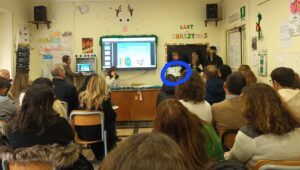
In the current school year, our Liceo is implementing four eTwinning projects, involving all the different campuses of the institute. During the event, students from the Via Giovanni da Procida site presented the project L.E.A.P. – Languages for Empowerment, Awareness, and Peace.
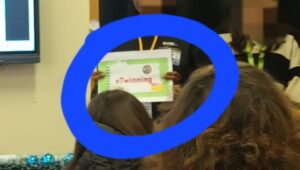
This project explores how plurilingualism and strong language skills can empower young people to become active citizens, intercultural communicators, and peacebuilders in a rapidly changing world.
Students reported on the activities carried out so far with their German partner school. Through online forums, they have exchanged “dream job” riddles and reflected together on which professions contribute to building a democratic society.
In the coming weeks, students will also take part in videoconferences, which will allow them to exchange ideas and opinions synchronously, further strengthening dialogue, collaboration, and intercultural understanding.
ERASMUS+ KA 121 2025-2026
Students as Erasmus+ Ambassadors: sharing experiences, inspiring futures
One of the most valuable outcomes of our Erasmus+ KA121 Project (2025–2026) has been the opportunity for students to become active ambassadors of international learning by sharing their experiences with the wider school community.
During a dissemination event, students who had participated in the different Erasmus+ mobility activities carried out throughout the school year took on the role of testimonials, each presenting the knowledge, skills and personal growth gained through their own international journey.
Students who welcomed an Erasmus+ group from Frankfurt at the end of September 2025 reflected on the importance of hospitality, intercultural dialogue and teamwork. Those who participated in the Group Mobilities to Coburg and Madrid shared how living and learning alongside peers from other European countries strengthened their language skills, self-confidence, adaptability and European citizenship. Equally inspiring were the contributions of the students who hosted in class Long-Term Mobility (LTM) students from France and Germany, highlighting how international learning can also take place at school through daily interaction, cultural exchange and lasting friendships.
By telling their stories firsthand, the students offered authentic and engaging accounts of their Erasmus+ experiences, demonstrating that international mobility is not only about travelling abroad but also about developing key competences for life: communication, collaboration, cultural awareness, problem-solving and openness to diversity.
Their presentations inspired younger students to look forward to future Erasmus+ opportunities and contributed to fostering a school culture that values internationalisation, active citizenship and lifelong learning. Once again, our students proved that the most powerful ambassadors of Erasmus+ are those who have experienced its transformative impact themselves.
0